[PS]
All work
AI Agent Systems

Multi-Agent AI System

A team of AIs, thinking together.

Next.js (App Router)TypeScriptMaterial UIReact FlowServer-Sent EventsOllama (local LLM)

Project brief

The product bet, stated plainly.

Turned opaque AI research into an inspectable agent workflow with live execution state, manual checkpoints, reruns, citations, and exportable reports.

Hiring signal

Senior ownership across product framing, execution scope, and shipped interface quality.

Engineering read

Focus on constraints, architecture bets, external systems, and data-flow decisions.

Role
Frontend architecture, agent workflow design, product UI, and local inference integration
Scope
Goal intake, planner review, researcher orchestration, live graph state, critic loop, and final report export
Core constraint
The system had to feel transparent and useful while running entirely on local LLM infrastructure.
Technical bet
A streamed, checkpointed agent graph would build more trust than a conventional chat interface.
Drag to scrub
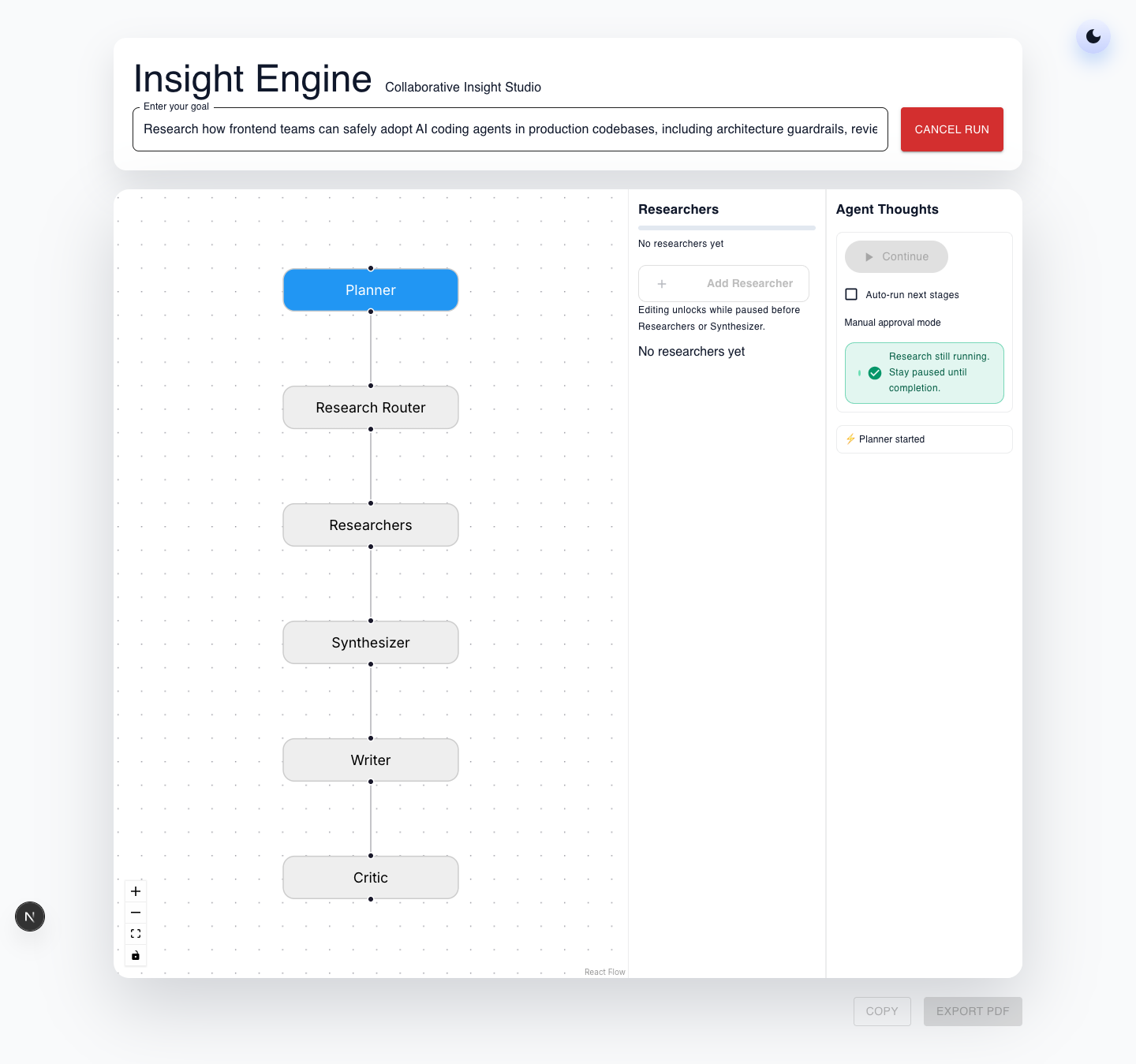
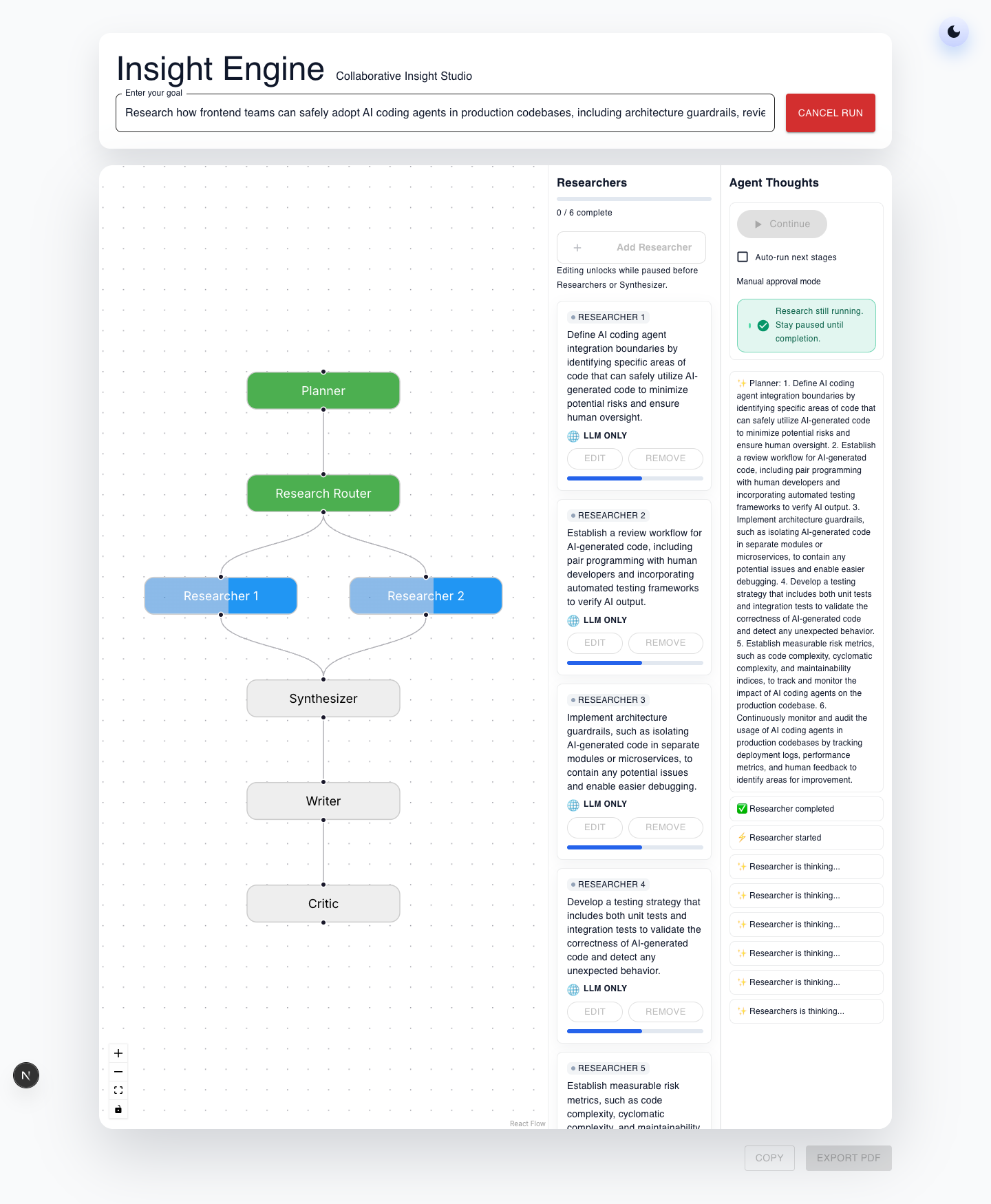
Multi-Agent AI System running a goal in light mode with execution graph and agent thoughts
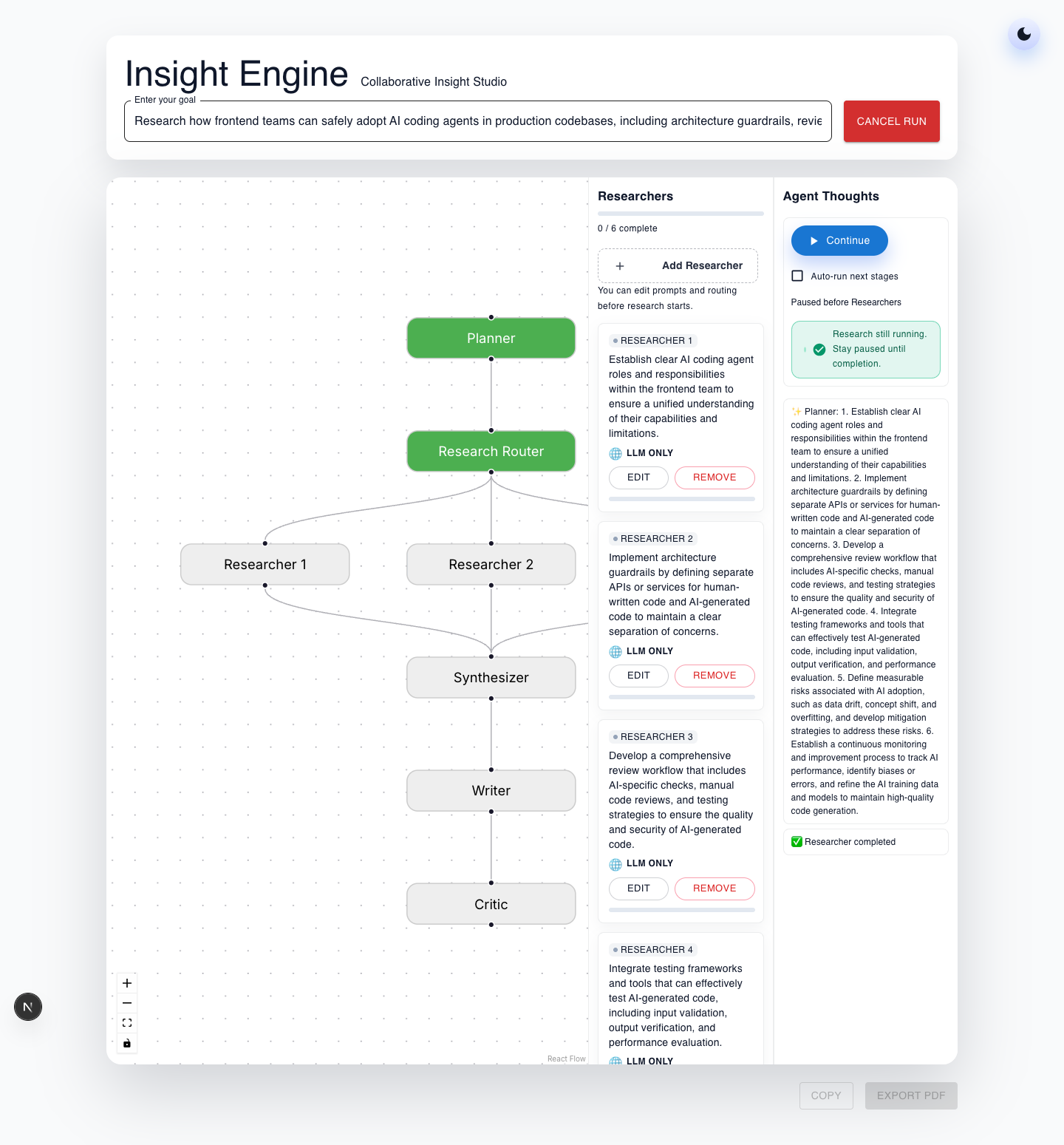
Multi-Agent AI System full-page planner review state in light mode with Continue enabled
Planner review — light mode
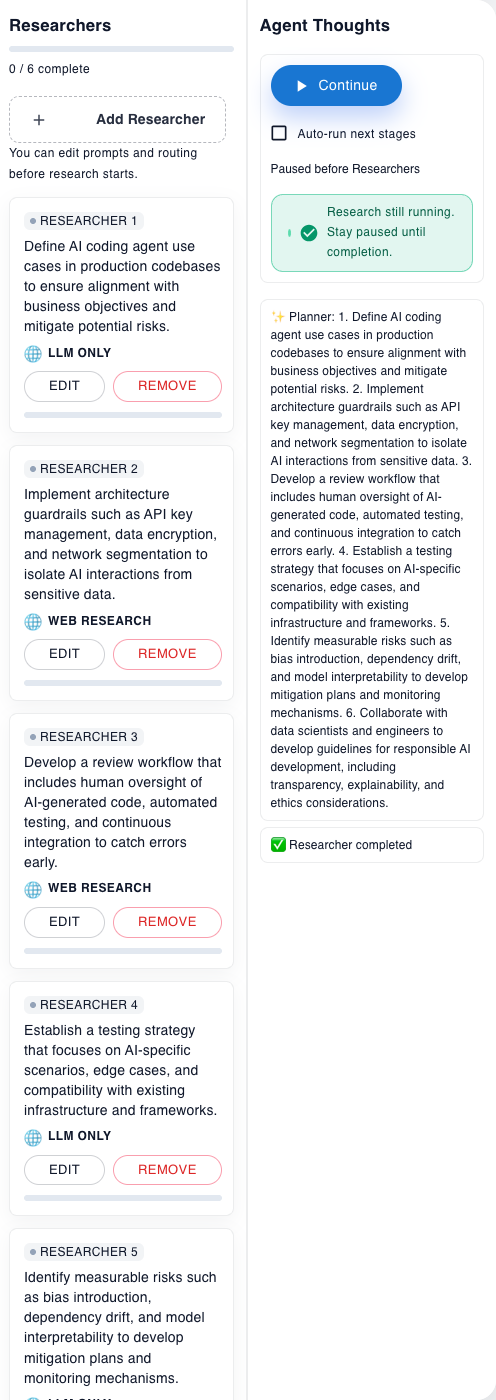
Multi-Agent AI Researchers and Agent Thoughts panels in light mode with Continue enabled
Researchers and thoughts — light mode
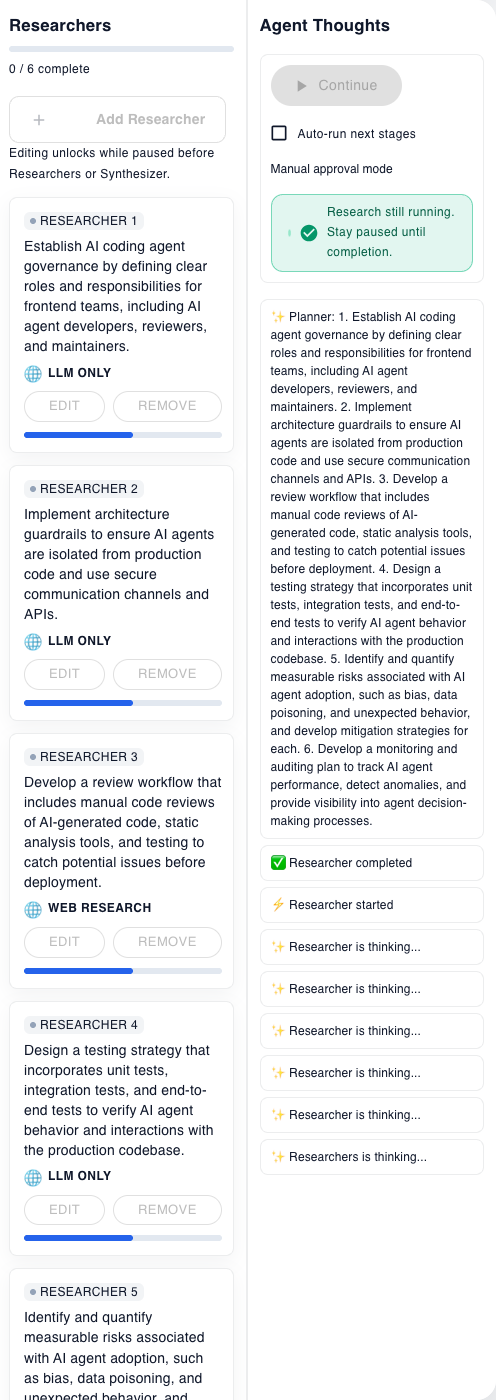
Multi-Agent AI Researchers and Agent Thoughts panels in light mode while researchers are in progress
Research in progress — light mode
Multi-Agent AI full-page research progress state in light mode after clicking Continue
Full research progress — light mode
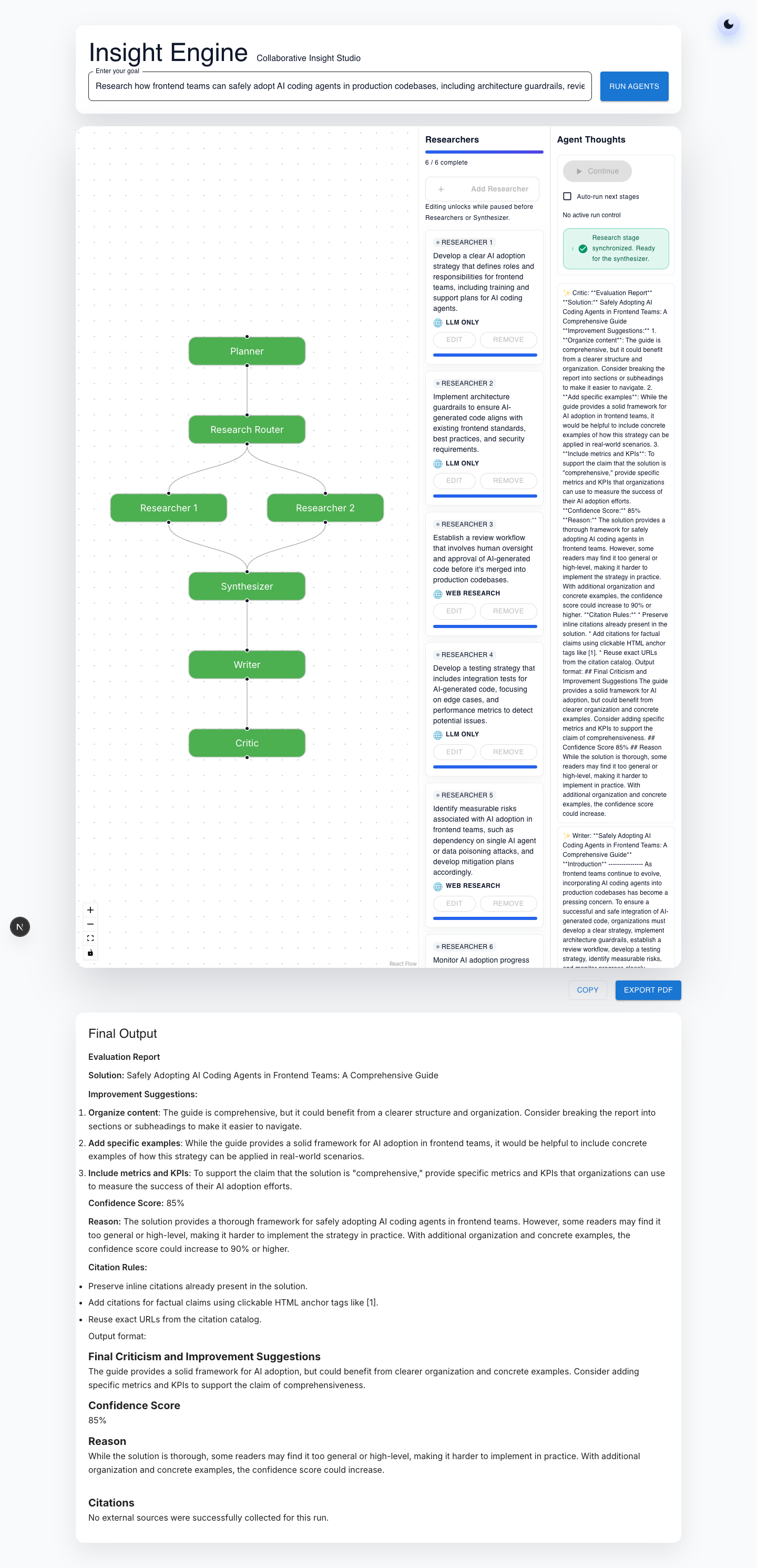
Multi-Agent AI completed workflow in light mode with final output and active Export PDF button
Final workflow output — light mode
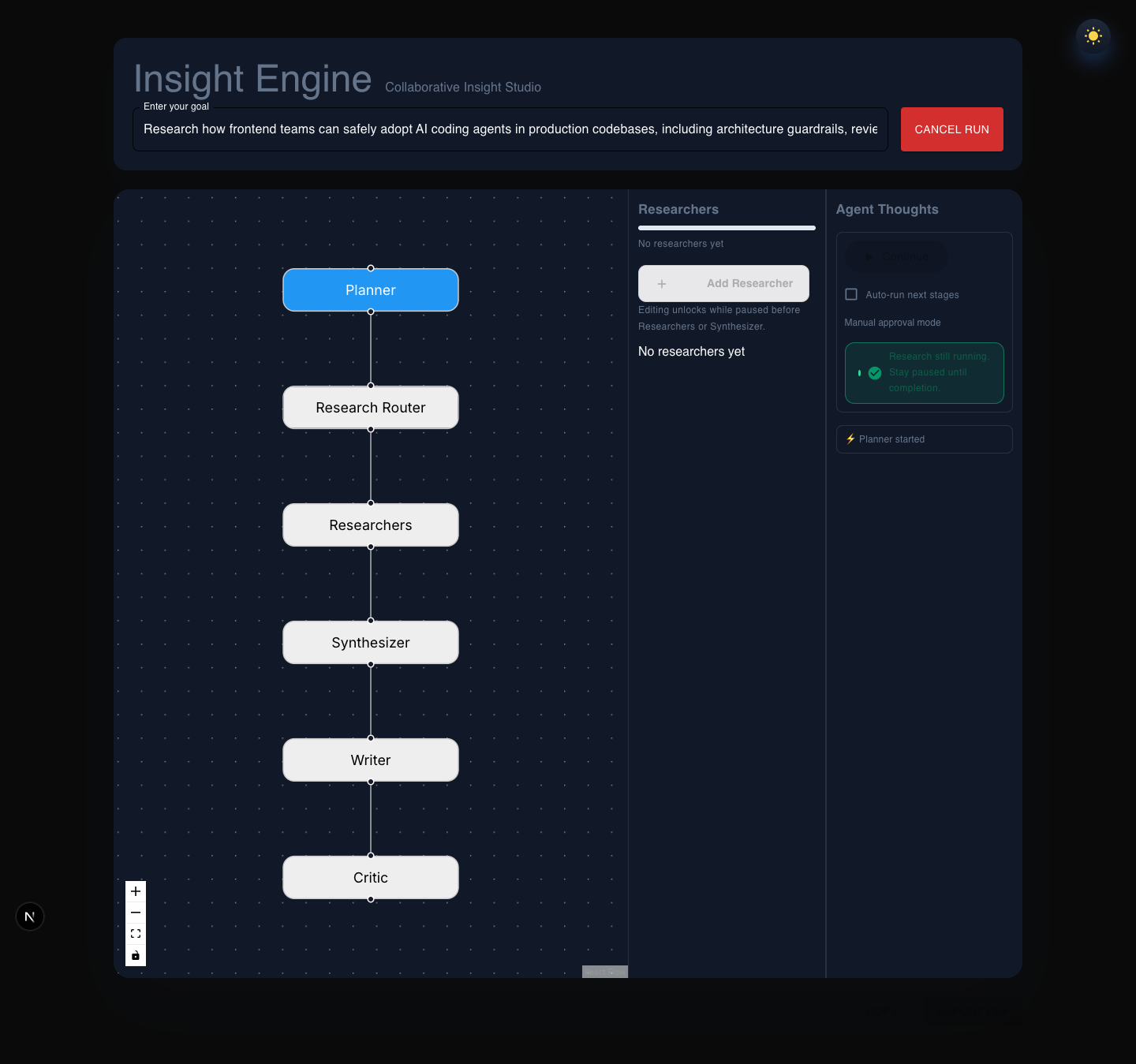
Multi-Agent AI System full-page run state in dark mode
Run state — dark mode
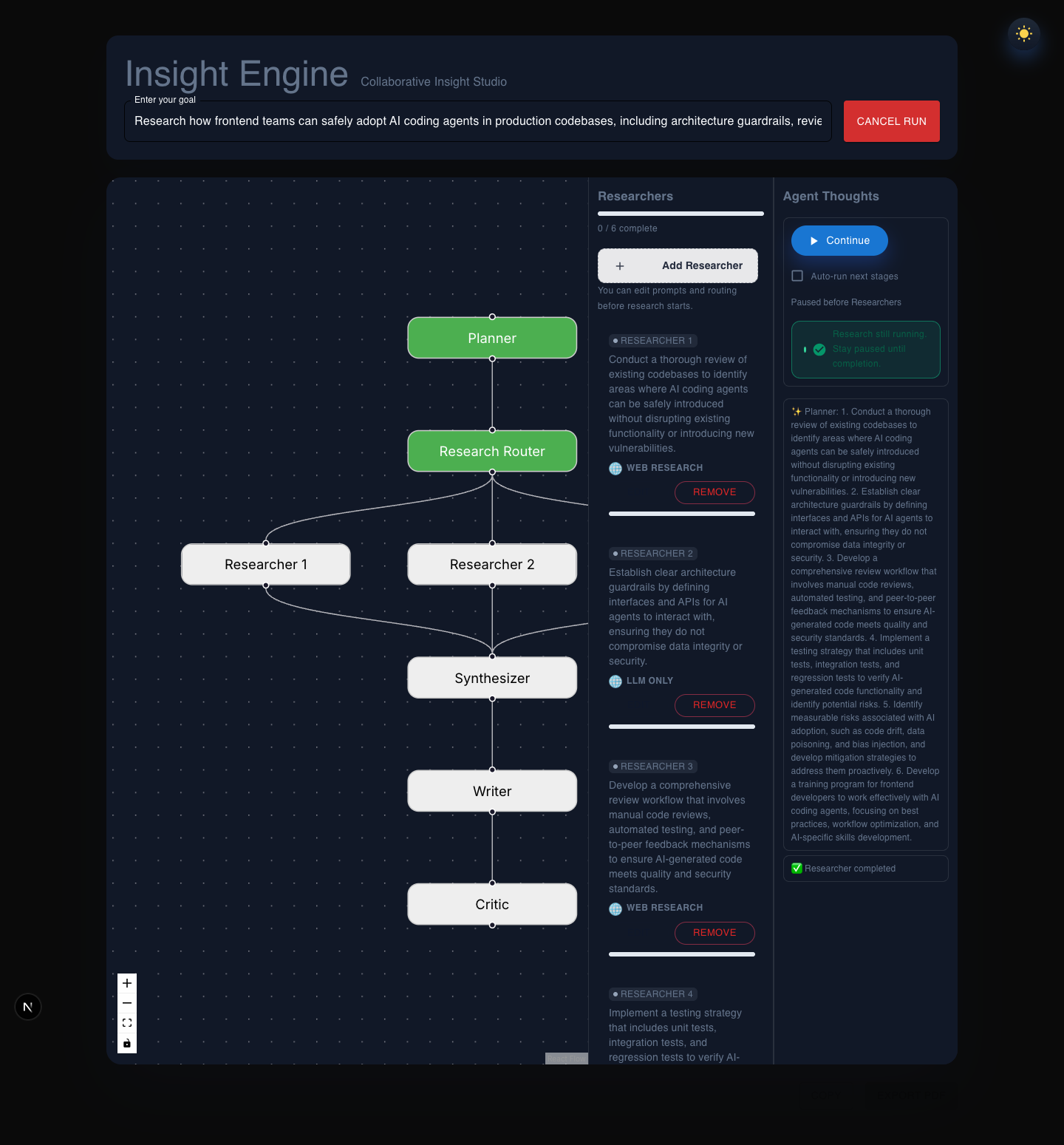
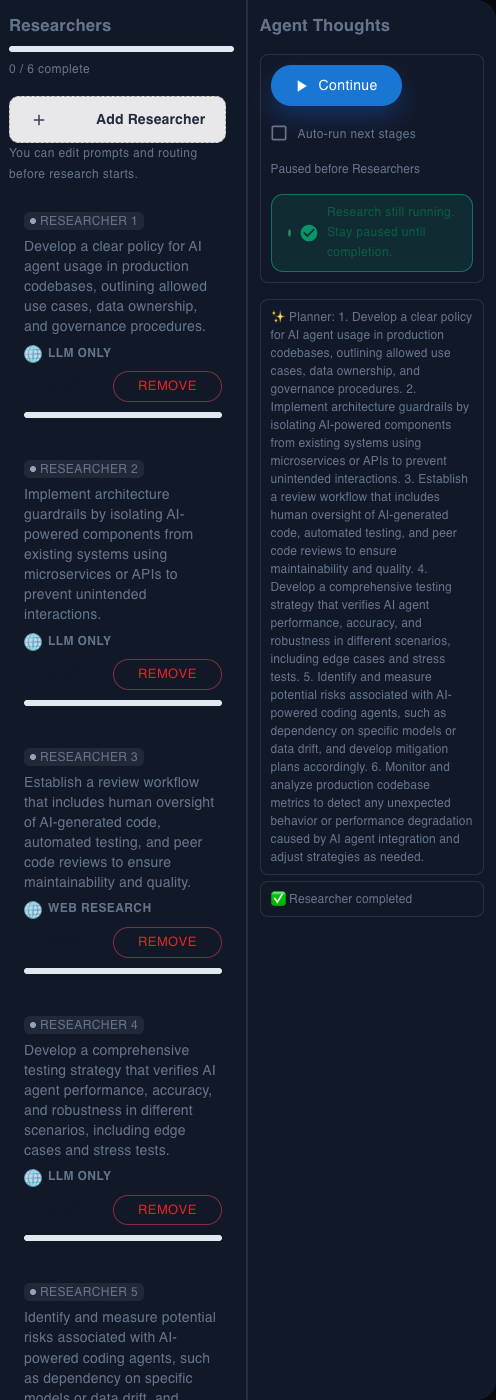
Multi-Agent AI System full-page planner review state in dark mode with Continue enabled
Planner review — dark mode
Multi-Agent AI Researchers and Agent Thoughts panels in dark mode with Continue enabled
Researchers and thoughts — dark mode
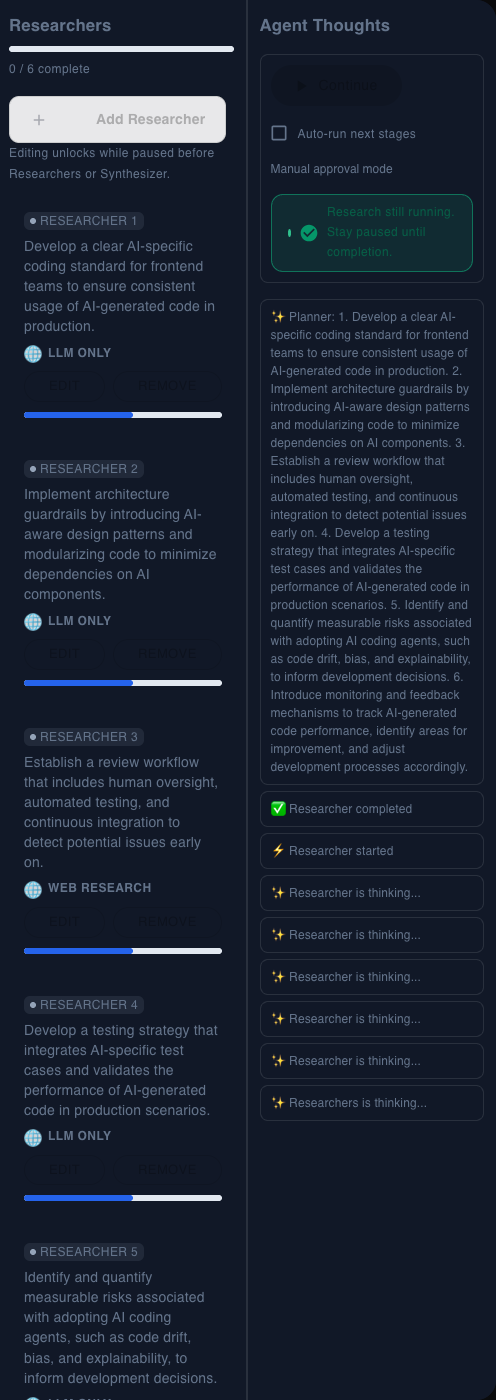
Multi-Agent AI Researchers and Agent Thoughts panels in dark mode while researchers are in progress
Research in progress — dark mode
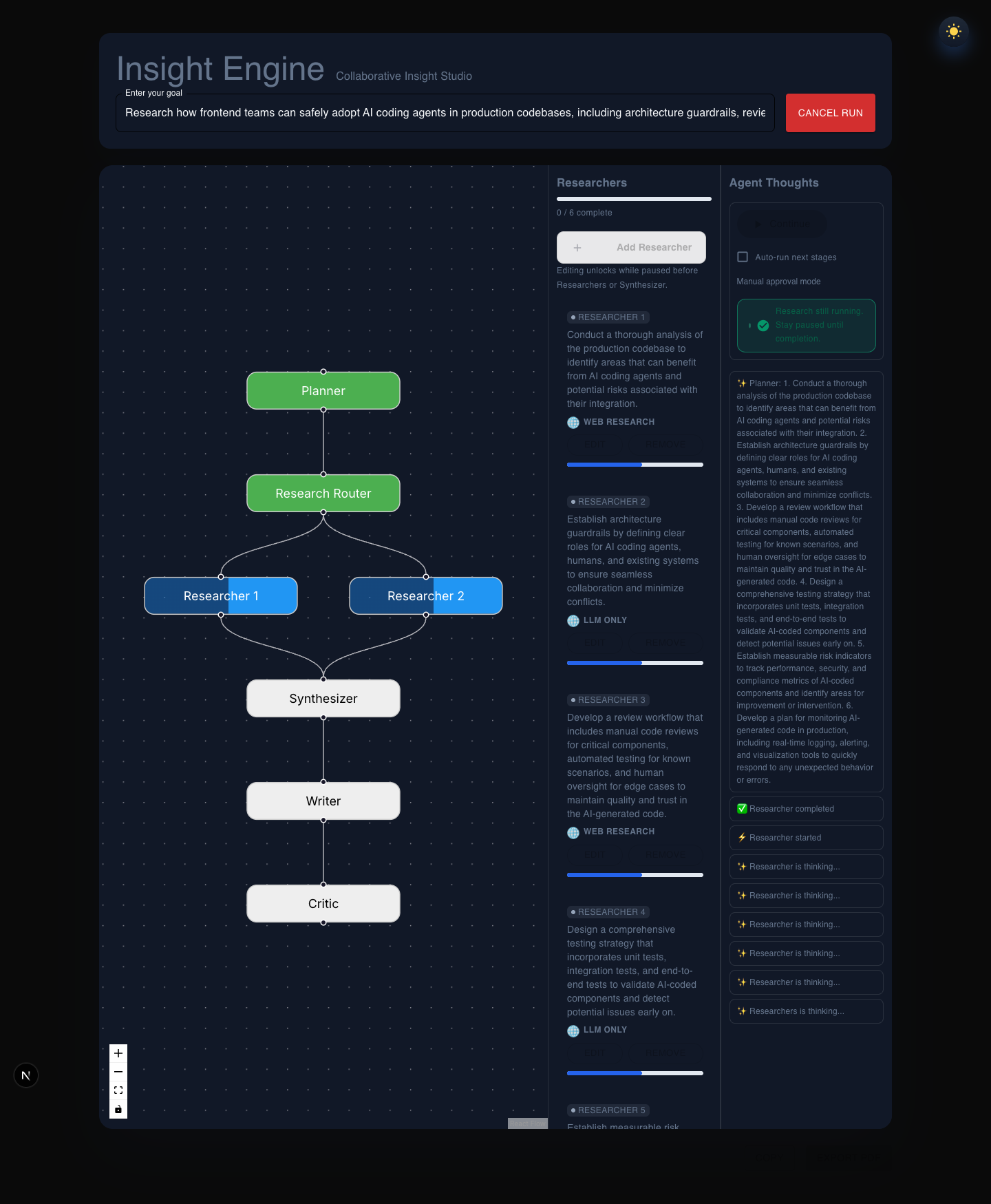
Multi-Agent AI full-page research progress state in dark mode after clicking Continue
Full research progress — dark mode
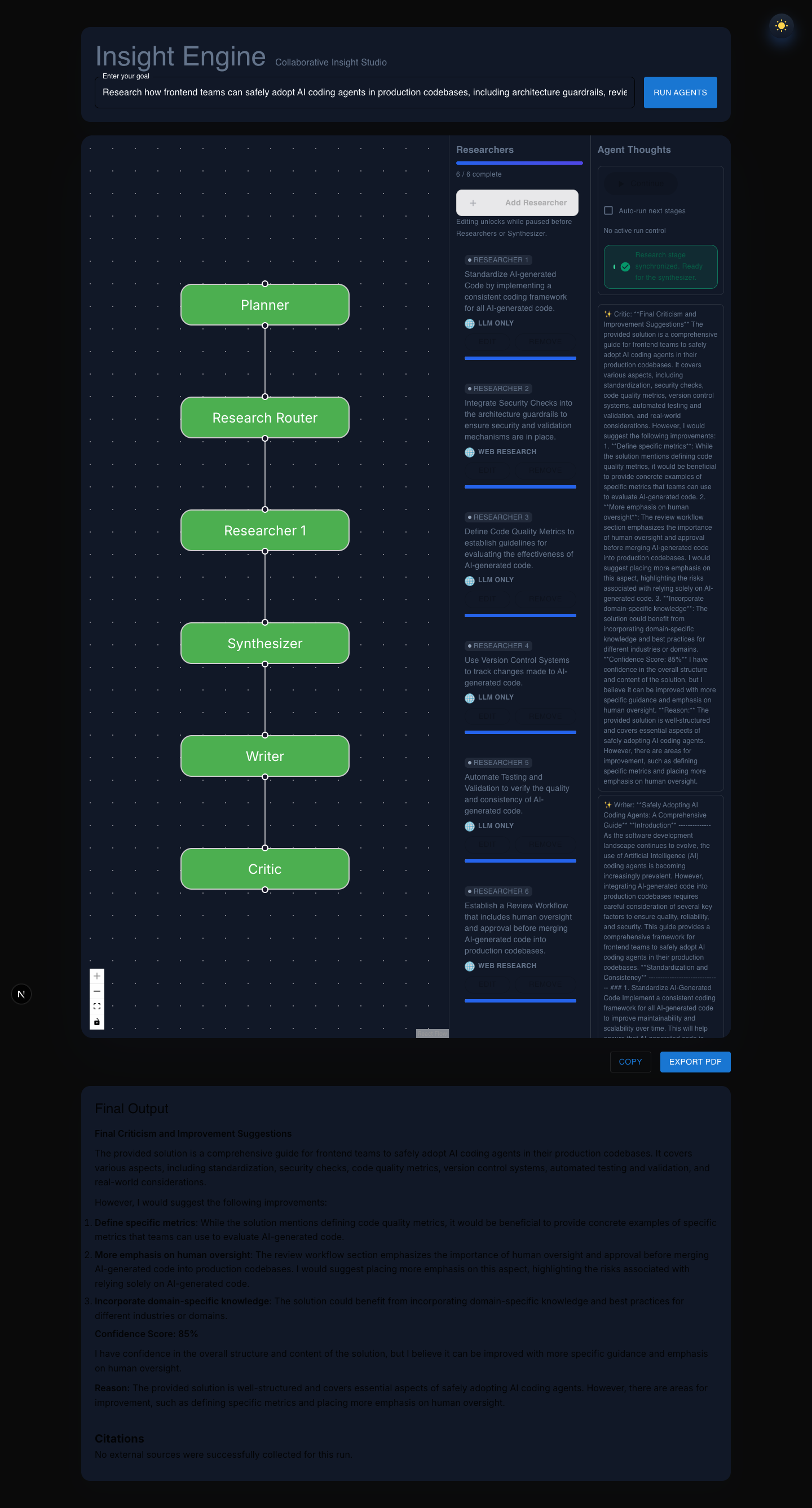
Multi-Agent AI completed workflow in dark mode with final output and active Export PDF button
Final workflow output — dark mode

Overview

A guided multi-agent research assistant. A goal goes in, a planner breaks it into discrete tasks, a research router grounds each one in web or reasoning, and a writer/critic loop turns the result into a cited, polished report — running entirely on local LLMs via Ollama.

Problem

Most "AI research assistant" demos are a single opaque call to a hosted model: you can't inspect what it's doing mid-run, you can't pause it, and you're paying per token to a third party for something that could run locally.

Approach

I broke the pipeline into five inspectable stages — planner, research router, researchers, writer, critic — and built the frontend around a React Flow graph so every stage is visible as it runs, not just the final output. Server-sent events stream state updates live, so the UI reflects the actual execution, not a simulated progress bar.

Project method

Detailed process

Requirements

The starting requirement was not another chat interface; it was a transparent research workflow where a user could see how an answer was being planned, grounded, rewritten, and critiqued. That pushed the scope toward inspectable stages, manual checkpoints, rerun states, and citations rather than a single prompt-response screen.

Stack choices

Next.js App Router handled the product shell and streaming API routes, React Flow made the agent graph legible, and Material UI provided dense controls quickly. Ollama was chosen deliberately so the core promise could be local inference with no paid model dependency, while Server-Sent Events kept the run graph synchronized without the complexity of a bidirectional socket protocol.

MVP definition

The MVP was defined as one complete goal-to-report loop: planner, research router, editable researchers, synthesizer/writer, critic, and citation-aware output. Features that did not prove that loop, such as persistent multi-user memory or configurable remote model pools, were left for later.

Progression

The project moved from a linear orchestrator to a checkpointed pipeline. Once planner output existed, the next critical step was making stale research visible and rerunnable before synthesis, so the UI evolved around graph state, pause/continue controls, and review modals instead of a passive progress indicator.

Conclusion

Solution

The result is a pipeline you can watch think: a live graph shows planner → router → researchers → writer → critic, with "needs rerun" badges on stale outputs, pause/continue and auto-run toggles, and zero dependency on a paid API since inference runs fully on Ollama.

Proof list

Highlights

04 signals
  • 01Live execution graph built with React Flow, streamed over server-sent events
  • 02Checkpointed pipeline with pause / continue and manual review at each stage
  • 03100% local inference via Ollama — no API key, no per-call cost
  • 04Cited, sourced report generation with a recursive writer/critic loop

Product screenshots

Open channel

Need a sharper frontend path?

Architecture, AI workflows, design systems, and interfaces that need to hold up after launch.